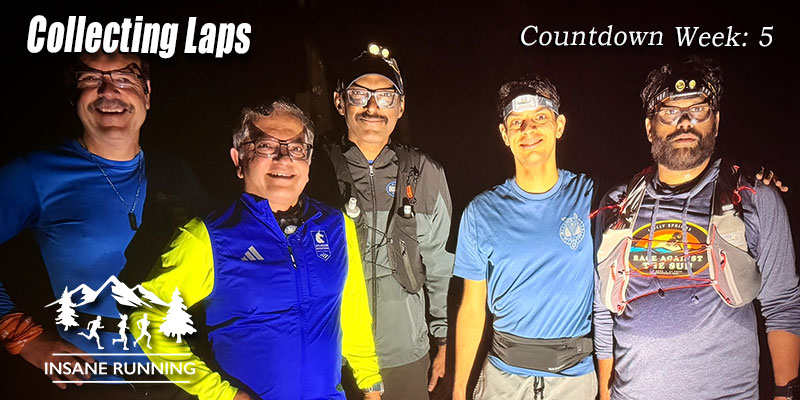
Collecting Laps: one lap at a time to 100: Week 5, The Pacer’s Playbook
Last week, we focused on activating your crew—the engineers of your pit stop. This week, we turn our attention to your co-pilot for the most critical phase of your journey: your pacer. After completing the second peak week simulation, you have now experienced the profound physical and mental fatigue that sets in during the later stages of a long-distance effort. A good pacer is your single most powerful tool to navigate that challenge.
This is part of a series of posts regarding how we prepare, plan, and train to complete the 100-mile Ultramarathon Umstead 100. Our series for this event: Collecting Laps: one lap at a time to 100. For all the ultrarunning series, here, follow the link. Training for a 100. Alternatively, you can also follow our Podcast so you don’t miss the weekly summary post.
At the Umstead 100, you are allowed a pacer after mile 50. This is precisely when the race truly begins. A pacer is not just company; they are your strategist, your guardian, your motivator, and your external brain when yours has gone offline. Choosing the right person and preparing them effectively is a non-negotiable step toward a successful finish.
Assessment:
Pacers play a crucial role in providing support and assistance to ultrarunners during the event, usually after certain mileage, for us at Umstead 100 is after 50 miles (4 loops). They are key, especially at the later stages, when fatigue, mental fatigue, and physical exhaustion become significant challenges. Here are some expanded responsibilities for pacers:
Motivation and Mental Support: One of the primary roles of a pacer is to provide continuous motivation, encouragement, and mental support to the runner. They help keep the runner-focused, motivated, and mentally strong, especially during the toughest sections of the course. This most of the time is during the night time portion or a very challenging terrain or later miles of the event.
Pacers offer positive reinforcement, affirmations, and reminders of the runner’s goals and achievements to help them stay motivated and push through moments of doubt or fatigue. They engage in conversation, storytelling, or distraction techniques to divert the runner’s attention from discomfort or negative thoughts, fostering a positive and determined mindset. Creating a supportive and uplifting atmosphere, fostering camaraderie, teamwork, and mutual encouragement between the runner and pacer. Pacers may share stories, jokes, or anecdotes to lighten the mood and boost morale, creating a positive and enjoyable experience for the runner despite the physical challenges of the race.
Navigation and Course Management: Pacers assist the runner with navigation, helping them stay on course, follow the designated route, and navigate tricky sections of the course, particularly in trail ultramarathons where the terrain may be challenging or poorly marked. Fortunately for us, our event is a 12.5 mile loop and from previous experience very well marked and very limited opportunities to miss and entrance or a turn.
The pacers familiarize themselves with the race course, course markings, aid station locations, and potential hazards in advance to provide effective guidance and direction to the runner. Depending of the event and location they may carry maps, GPS devices, or course descriptions to aid navigation and ensure the runner stays on track, especially during nighttime sections or in remote areas.
Pacing Strategy and Time Management: Pacers help the runner maintain an appropriate pacing strategy based on the race course, terrain, and weather conditions, taking into consideration the runner’s fitness level and goals. They monitor the runner’s pace, heart rate, and perceived exertion, providing feedback and adjustments to ensure the runner avoids overexertion or burnout and maintains a sustainable pace throughout the race. In my case also helping me with keeping an eye to my glucose levels. Pacers may use timing devices or split times to track progress and help the runner set achievable goals and milestones along the way.
Nutrition and Hydration Assistance: Pacers assist with executing the nutrition and hydration strategies, reminding them to eat and drink according to their race plan and individual needs. In some events where pacers could be used as “mules”, they can carry supplies such as water bottles, hydration packs, energy gels, snacks, and electrolyte drinks to provide immediate access to fuel and fluids during the run. It is the responsibility of the runner to learn about what is allowed in the event. Not all events allow pacers to carry things for the runner. Regardless of being able to help with carrying items for the runner, pacers monitor the runner’s intake of calories, fluids, and electrolytes, encouraging them to consume adequate nutrition and stay hydrated to maintain energy levels and prevent dehydration or bonking.
Safety and Emergency Preparedness: Pacers prioritize the safety and well-being of the runner, remaining vigilant for signs of fatigue, dehydration, overheating, hypothermia, or other medical issues. In some events, they need to carry essential safety equipment such as a first aid kit, emergency blanket, whistle, and mobile phone to respond to emergencies or summon assistance if needed. Pacers communicate with race officials, aid station staff, or emergency services in case of an emergency or to report injuries, incidents, or medical concerns and coordinate appropriate support or evacuation procedures.
Planning:
Selecting and setting up the best pacer team for a 100-mile race involves careful consideration of various factors to ensure the runner receives effective support and assistance throughout the event. Here are a few points that you might consider in selecting and setting up your pacer roster.
Identify Experienced Pacers: Look for individuals who have experience pacing in ultramarathons, particularly in races of similar distance and terrain to the 100-mile race you are participating in. Whenever you can, prioritize pacers who are familiar with the specific course and its challenges, including elevation gain, technical terrain, and potential hazards. Choose pacers who have a strong understanding of pacing strategies, nutrition/hydration needs, navigation skills, and emergency preparedness. The more experience, the better chances are that they will support you in a way that increases the chances for a great event.
Assess Compatibility and Chemistry: Select pacers who have a good rapport with you as the runner and share similar goals, values, and communication styles. You are going to be exhauted and in the later portion of the event you might not nescessary be thinking straight, for that consider pacers who are supportive, encouraging, and adaptable, able to provide the emotional and mental support you need during the race. Ensure compatibility in pacing preferences, such as preferred running pace, walking breaks, and rest intervals, to maintain harmony and effectiveness during the run.
Communicate Expectations and Race Plan: Clearly communicate your race goals, pacing strategy, nutrition/hydration plan, and any specific preferences or concerns to your pacer team in advance. They need to understand your A, B, C, and especially your N food lists. Discuss pacing logistics, including meeting points, pacing segments, and estimated arrival times at aid stations, to ensure everyone is on the same page.
TIP: The main thing I know for sure about the pacers is that they are not mind readers. You need to clearly communicate well in advance, before, during, and after the event.
Please provide your pacers with detailed information about the race course, aid station locations, course markings, and potential challenges to help them prepare effectively. Including how to help you in different situations. What is ok to talk about and what is not. Explain what the best way is to keep you motivated and going. Some runners like a drill seargent approach, others a very compasionate, do not hurt my feeling pacer. For me for example, normal talk, ask me if and when do I want to start pressing the pace or changing something.
Training and Preparation: If possible, schedule training runs or simulation sessions with your pacers leading up to the race to familiarize them with your pacing preferences, running style, and communication cues. Practice the plan and the different pacing strategies, nutrition/hydration protocols, and navigation techniques together to build confidence and cohesion as a team.
TIP: For us since we are fortunate that it is a local event, we are able to head out with the pacers and prepare them in advance to the key areas, aid station and locations that are relevant to the excecution of the plan.
Caution: The runner is responsible for the pacers. Most events do not allow dropping the pacer or leaving him/her behind or abandoned. Ensure your pacers are physically prepared for the demands of pacing their portion of the 100-mile race, including long hours on their feet, running at night, and adapting to changing weather conditions. If they get injured, it is your responsibility to make sure they are ok.
Equip and Outfit Your Pacers: Make sure to communicate with your pacers and if nescessary provide your pacers with essential gear and equipment, including hydration packs, headlamps, reflective gear, nutrition/hydration supplies, navigation tools, and safety equipment.
TIP: Some events might have a require list of items that are must to have at all time. Become familiar with the requirements and prepare and coordinate ahead of the event.
Ensure your pacers have appropriate clothing and footwear for the anticipated weather conditions and terrain, including layers for cold temperatures, rain gear, and sturdy trail shoes.
TIP: Encourage your pacers to carry a small backpack or waist pack to store supplies and essentials for easy access during the run. Perhaps additional ziplock, ice bandana, and gels.
Establish Communication and Support Plan: Set up reliable communication channels between you and your pacers, such as two-way radios, cell phones text group, or GPS tracking devices, to stay connected during the race. Establish checkpoints for regular communication and updates between pacing segments, aid stations, or key milestones along the course.
TIP: Similar to the crew, you might have a text group that includes your crew and pacers for ease of communication. But also consider having your crew lead to create another text group that only they can have access to. They might have to discuss a current situation, how to address it, and move forward without making you aware. This is especially true if things are not going according to plan or if you have other issues. You want to be shielded from that stress while running or covering any distance.
Designate a crew member or support person as a point of contact for coordinating communication and logistics between you and your pacers during the race. Do not forget the race director, coordinators, and medical assistance personnel.
Diabetes Learning Notes:
For the Type 1 athlete, the pacer’s role is elevated from a strategic asset to a mission-critical safety guardian. They are your co-pilot in every sense, helping you navigate not just the trail, but the complex, ever-changing landscape of your blood sugar.
Your T1D Pacer Audit must assess one key trait: are they calm and clear-headed under medical pressure? They don’t need to be an endocrinologist, but they cannot be someone who panics when a CGM alarm goes off. They must be a willing and capable student.
Your T1D Pacer Briefing is the most important training session you will conduct.
- Review the “T1D Cheat Sheet”: The one-page guide you created must be reviewed in detail with your pacer. They should understand your hypo symptoms and your exact treatment protocol. They must carry a copy with them.
- Hands-On Tech Review: Show them your pump and CGM. Explain what the numbers and trend arrows mean. Explain what the different alarms sound like. Say the words, “This is the Urgent Low alarm. If you hear this, our only priority is getting sugar into my body immediately.”
- The Low Protocol Drill: Verbally (and even physically) walk your pacer through your process for treating a low. “My rule is, if I’m below 80, I eat one of these gels from this specific pocket. We then walk for 15 minutes and re-check.” This removes all guesswork and empowers them to help you confidently.
- Define Communication Cues: Your pacer’s most important job is to be your backup brain. Give them a simple, required script. Every 30 minutes, they must ask you two questions: “What’s your number? What’s the arrow?” This automates the check-in process and ensures that even when you are exhausted and forget to look at your CGM, they will not.
This week’s actual numbers:
| Week 5 | Mon | Tue | Wed | Thur | Fri | Sat | Sun | Total |
| Plan | Stretches & Rolling | 6 | 5 | Rest | 10 | 31 | 31 | 83 |
| Actual | Stretches | 5 | 7 | Stretches | Stretches | 14 | 10 | 36 |
Next Week Plan: Tokyo Marathon for me
| Week 4 | Mon | Tue | Wed | Thur | Fri | Sat | Sun | Total |
| Plan | Stretches & Rolling | 6 | 5 | 6 | Rest | 20 | 20 | 57 |